Are you aware of the things which have played a role in shaping or still controlling your reality?
Have you ever noticed yourself getting triggered and reacting to a particular incident in the same manner as you did the last time when something similar happened?
But after some time when you look back at it with an objective eye, you might feel that if you could have responded in some other way then the current face of reality could have been different.
After brooding over those piled-up incidents you feel helpless or your brain justifies the behavior and your self-talk goes on like- Only this can happen to me! or I can not handle anything. But somewhere your true self knows, this behavior is not serving you anymore or in some way bringing more chaos to your life.
So how did you get programmed for reacting in a certain way?
How does a trigger develop over time?
Triggers develop by the exposure to repetitive traumatic emotional experiences, presently existing as deeply rooted core wounds from your childhood or after a toxic relationship.
Trigger acts as a psychological stimulus that can remind us of a traumatic experience. As studies have shown that the more emotional arousal in any incident the more prominently it lasts in our Brain’s long-term memory. For example memories of embarrassing moments and whenever we tend to recall them elicit the same amount of physical and emotional response in an individual and a person can re-experience them.
Let’s take a look at Agatha’s childhood, her parents were overly critical of her, regardless of her giving the best she could, they focused on finding her faults, used an authoritarian tone, to correct her, and just to make her more aware of the mistakes she made but she was hoping for some encouragement from them. So whenever she tried something new she never got appreciated and felt that she is always at fault and felt neglected by her parents when she began behaving in a certain way to please them. Just to avoid conflicts with them, she tried being a “good girl”. Behaved passively to earn their love and kindness but nothing improved.
The emotions she felt in those moments were all valid as they were neurochemical reactions, elicited by those words or certain behavior. The repeated exposure to such events might have imprinted a belief that “I am not good enough.” or “I can’t do any work properly!”, “I am alone.”. These statements were all invisible and continuously got repeated in her self-talk and became a normal response whenever she made any mistake or faced any failure and became an important part of her most powerful subconscious mind.
Now, if we fast forward and see Agatha’s adult life. Her boss came just to correct her, and said, “You didn’t add this in your work, modify it!” She felt triggered and thoughts flooded, she began to feel anxious, rejected, ashamed, and embarrassed.
Now her core beliefs are formed and the world she sees is through the same traumatic filter. She is being controlled by her feelings and emotions, her emotional brain hijacks her rational mind and she is now becoming a victim of her life’s circumstances. Rather than designing her own life and choices, she feels indecisive and amidst this trap, she thinks everything is already determined, she really can’t do anything and she needs to keep trying to maintain her sanity, and once happened incidents will always keep coming back in her present reality to haunt her.
This is due to lots of accumulated painful moments, assumptions, and repeated stories over time stored in the subconscious mind. After getting heavily overwhelmed by those emotions what people try to do is distract themselves and sweep all those emotions under a rug as an avoidance coping mechanism or take the help of maladaptive coping mechanisms such as alcohol, drugs, or even revenge.
Steps to identify the patterns and how to change them:
Your beliefs empower you or disempower you! For this, it’s important to examine them as most people don’t even know. A psychiatrist Ralph Lewis writes beliefs are energy-saving shortcuts in modeling and predicting the environment, beliefs help us reduce the amount of mental effort required to act.
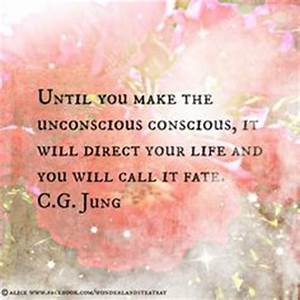
Until we don’t become conscious of those deep-seated core beliefs, we will keep repeating those patterns and keep becoming the victim of life’s circumstances. Unconsciously we will keep attaching those painful emotions even with new moments and keep seeing the world with those age-old filters which are maintaining the stagnancy in our minds.
In case any trigger comes, you tend to ruminate over it again and again, and would cause more pain to you. This is called finding pleasure in suffering as this is all you have known till now.
We give our emotional responses guided by our core beliefs and they appear as overwhelming uncomfortable floating thoughts and you might feel anxiety, palpitations, numbness, anger, or fear.
STEP 1
RECOGNIZE: Bring them from your mind’s invisible state onto the paper.
Any unpleasant experience comes and feels overwhelming to you and all those ruminating thoughts come onto the surface. After some moment when you go back to introspect that moment – Ask what meaning am I giving to this situation ? or What’s causing me to feel this way?
Your mind may say.I can’t handle this. My boss feels I am dumb. I am responsible to fix all of this. I am alone. My life will always be as chaos. I can’t do anything right. I am useless. PUT ALL OF YOUR FEELINGS ON A PAPER.
STEP 2
METACOGNITION: A step towards becoming more aware of those beliefs and probing them.
Metacognition is thinking about what you are thinking about. First, realize you are not you’re thoughts, thoughts are just like waves they come and go. You are a consciousness who is aware of the thoughts, whose task is to notice them non-judgmentally and probe them why are they coming. By bringing awareness and examining them you create a distance between you and your thoughts and then it enables us to realize which beliefs should be kept and which are to be discarded.
How this awareness can be cultivated ? This I have explained in the privious blog post.
Ask is this all true? Do I have any evidence against these thoughts?
When we were small we didn’t know that we have a choice to choose an alternate perspective and were never taught to learn how to regulate our emotions. May be our life was all miserable at one point of time and during those incidents, we absorbed those narrative as the facts governing our lives till today.
STEP 3
Ask what alternative I could have used to handle that matter?
This step will bring your attention to other effective solutions and your brain will slowly get programmed. Then whenever such a similar situation will arrive your mind will give that effective solution right away.
This can take 5 to 10 mins of yours to think about that alternative thought or behavior but it can save you from hours and hours of ruminations.
“This is best done under the guidance of a psychologist, if you notice any traumatic experience of yours taking control of your life, then please take professional help and ease out your mental pain.”
 ManoSathi